


Blog Detail
November 11, 2026
Interior design is not just about choosing attractive colours, arranging furniture, or creating beautiful 3D designs. A good interior designer must also understand how different materials are made, how furniture is manufactured, and how design ideas are translated into actual products.
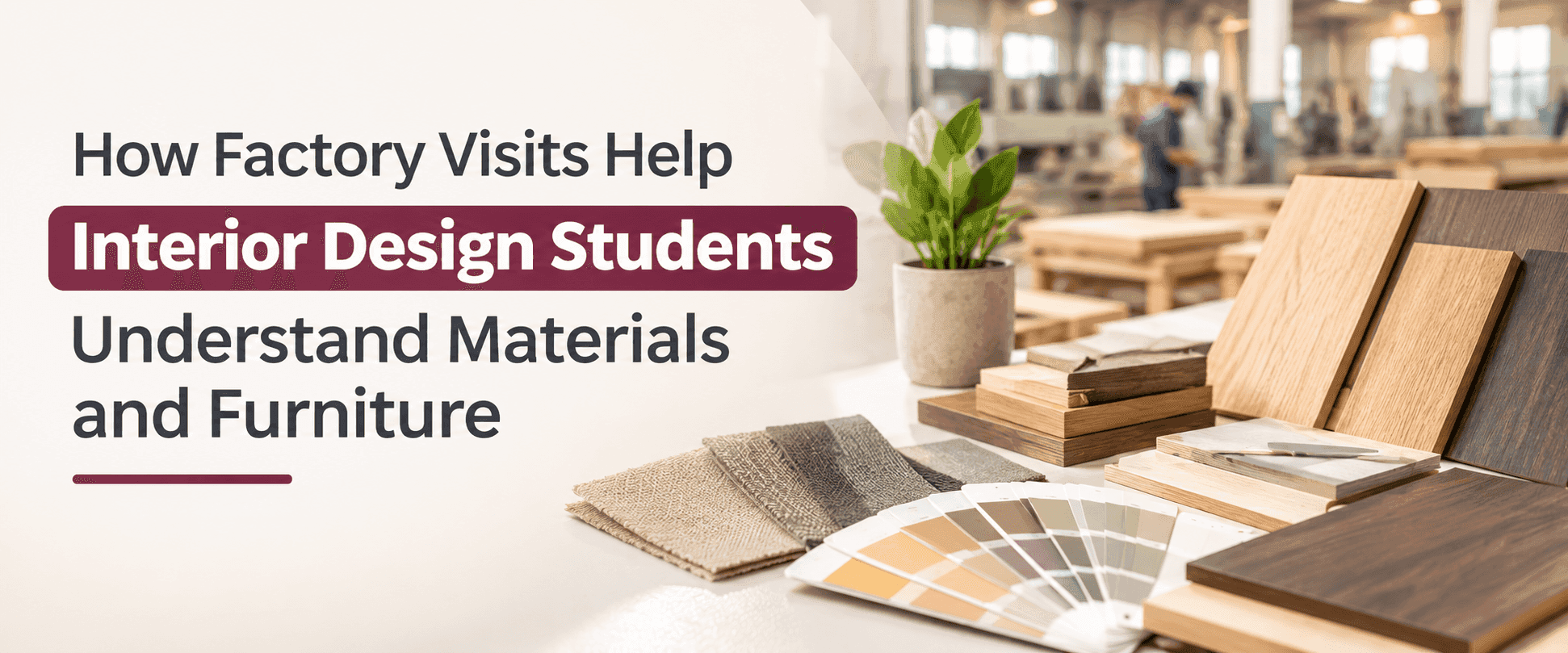
This is where factory visits become an important part of interior design education. They give students an opportunity to see what happens beyond the classroom and understand how the materials and furniture used in interior projects are produced.
For students planning to build a career in interior design, practical exposure to manufacturing processes can make learning more meaningful. It helps them connect design concepts with the actual requirements of the industry.
Why Are Factory Visits Important for Interior Design Students?
During regular classroom sessions, students learn about different materials, furniture styles, finishes, and design techniques. However, understanding these concepts becomes easier when they can see and experience them in a real manufacturing environment.
A factory visit allows students to observe how raw materials are processed, how furniture components are assembled, and how different finishes are applied.
For example, when students learn about modular furniture, they may study plywood, MDF, laminates, edge banding, hinges, and hardware in theory. During a factory visit, they can see how these materials and components come together to create a finished wardrobe, kitchen cabinet, or storage unit.
This practical understanding helps students make better design decisions in the future.
1. Understanding Different Interior Design Materials
Material knowledge is one of the most important skills for an interior designer. Every material has different properties, applications, costs, and limitations.
During a factory visit, students can get a closer look at materials commonly used in interior projects, such as:
- Plywood: Commonly used for cabinets, wardrobes, and furniture structures.
- MDF: Used for certain furniture components and decorative applications.
- Particle board: Often used in budget-friendly modular furniture.
- Laminates: Available in different colours, patterns, textures, and finishes.
- Veneers: Used to achieve a natural wood appearance.
- Glass and acrylic: Used in partitions, shutters, decorative elements, and modern furniture.
- Hardware and fittings: Hinges, channels, handles, and other components that improve furniture functionality.
Seeing these materials in person helps students understand that material selection is not simply about appearance. Durability, maintenance, moisture resistance, application, and budget also matter.
2. Learning How Furniture Is Manufactured
Furniture manufacturing involves several stages, starting from measurements and cutting to assembly and finishing.
A factory visit helps students understand the process behind commonly used interior furniture, including wardrobes, modular kitchens, TV units, study tables, and storage cabinets.
They may observe processes such as:
- Measuring and marking materials
- Cutting boards according to required dimensions
- Edge banding and surface finishing
- Drilling and preparing components
- Assembling furniture structures
- Installing hardware and fittings
- Checking the final product
Understanding these steps gives students a better idea of how their design drawings are converted into physical furniture.
It also helps them understand why accurate measurements and detailed drawings are essential in interior design projects.
3. Understanding the Importance of Hardware and Fittings
Hardware may look like a small part of furniture, but it plays a major role in its functionality and durability.
For example, the choice of hinges, drawer channels, handles, and sliding systems can influence how a wardrobe or modular kitchen works.
Students can learn about different types of hardware, where they are used, and how to select suitable fittings for different furniture requirements.
This knowledge becomes particularly useful when designing modular kitchens, wardrobes, and customised storage units.
4. Connecting Design Drawings with Real Furniture
Interior design students often work with floor plans, elevations, sections, and furniture layouts during their training.
However, a drawing on a computer screen can look very different from the actual product once it is manufactured.
Factory visits help students understand how technical drawings guide the manufacturing process. They can see why dimensions, material thickness, joints, measurements, and finishing details must be clearly specified.
For example, designing a wardrobe requires more than deciding its external appearance. The designer must also consider internal storage, shelf spacing, shutter dimensions, hardware placement, and available space.
This connection between drawings and manufacturing helps students develop a more practical approach to design.
5. Understanding Quality, Finishing and Workmanship
The quality of an interior project depends on more than the materials selected. The way those materials are processed, assembled, and finished also makes a difference.
During factory visits, students can observe the importance of proper cutting, accurate edge finishing, strong joints, neat assembly, and quality checks.
They can also understand how different surface finishes affect the final appearance of furniture.
This exposure helps future designers recognise good workmanship and communicate more effectively with carpenters, vendors, manufacturers, and execution teams.
6. Learning How Material Selection Affects Project Budgets
An interior designer must balance appearance, functionality, durability, and budget.
Two materials may look similar but have different costs, maintenance requirements, and performance. Understanding these differences helps designers recommend suitable options based on the client's needs.
Factory exposure can give students a better understanding of material availability, manufacturing methods, and the factors that influence furniture costs.
This knowledge is useful when preparing material specifications and discussing design options with clients.
7. Preparing Students for Real Interior Design Projects
A successful interior design project requires coordination between designers, clients, suppliers, manufacturers, and installation teams.
Factory visits help students understand that interior design involves teamwork and practical decision-making, not just creative ideas.
Students begin to recognise the importance of:
- Accurate site measurements
- Practical furniture dimensions
- Suitable material selection
- Clear technical drawings
- Budget planning
- Communication with vendors
- Quality checks during execution
These skills help bridge the gap between classroom learning and professional interior design work.
How Eduleem Makes Interior Design Learning More Practical
At Eduleem, the focus is on helping students understand both the creative and technical sides of interior design. The learning approach combines design fundamentals, software training, practical assignments, and industry exposure to give students a broader understanding of the profession.
Through its interior design course, Eduleem helps students explore important areas such as space planning, furniture layouts, material selection, drafting, lighting concepts, and 3D visualisation.
Factory visits are an important part of understanding how materials and furniture are used in actual interior projects. Students get an opportunity to observe manufacturing processes and connect their classroom knowledge with practical applications.
Eduleem also provides:
- Experienced trainers who guide students through design concepts and practical exercises.
- Updated curriculum covering essential interior design principles and applications.
- Practical assignments that help students develop their design skills.
- Factory visits for better understanding of materials and furniture manufacturing.
- Online and offline learning options.
- Weekend batches for students who need flexible schedules.
- An internship opportunity that includes one live project during the three-month internship period. Depending on project availability, it may involve a 1BHK, 2BHK, 3BHK, or villa.
With a focus on practical learning and industry exposure, Eduleem aims to help aspiring designers develop the knowledge and confidence required to work on real interior design projects.
If you are exploring interior design courses in bangalore, choosing a programme that includes practical exposure can help you understand the profession beyond textbooks and software.
Start Your Interior Design Journey with Eduleem!
Learn design concepts, understand materials, explore furniture manufacturing, and develop practical skills with expert guidance.
NEW BATCH STARTING SOON!
For course details and admissions:
Call: 96064 57497
Website: www.eduleem.com
Frequently Asked Questions
Everything You Need to Know
Yes. Eduleem offers both online and offline classes for its interior design course, giving students the flexibility to choose a learning mode that suits their schedule and preferences.
Get in Touch With Us
Choosing the right course can be confusing. Book a consultation with our expert trainers to get clear guidance and choose the right learning path for your career.


