


Blog Detail
November 02, 2026
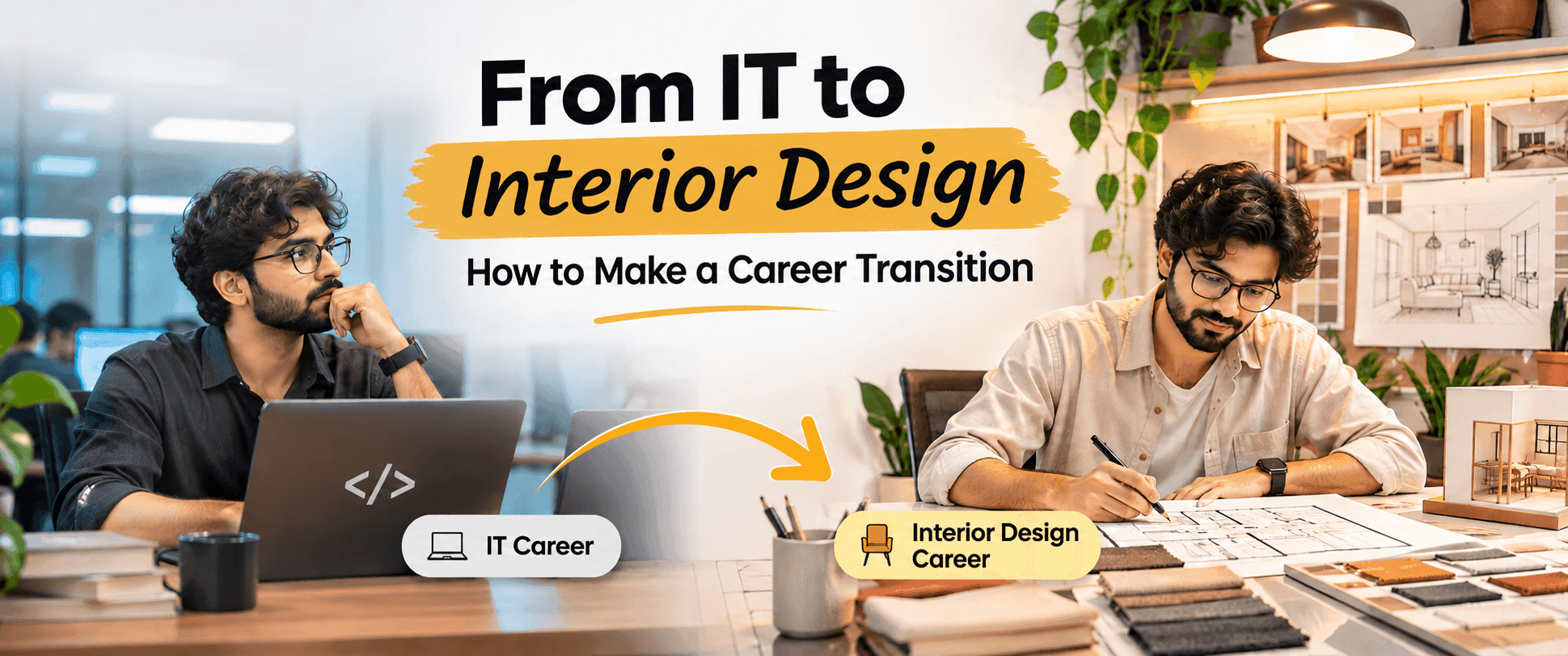
Working in the IT industry can offer a structured career path, opportunities to develop technical skills and the experience of working in a fast-changing professional environment. But after spending several years in technology, some professionals begin to question whether they want to continue on the same path.
Perhaps you enjoy designing spaces, exploring furniture layouts, experimenting with colours or understanding how beautiful interiors are created. Maybe you have always been interested in architecture and home design but chose IT because it seemed like a more practical career option at the time.
Now, you are considering something different.
Moving from IT to interior design may seem like a significant change, particularly if you have spent years building your technical career. You might wonder whether you need to start from zero, whether your existing skills will be useful, how long it takes to learn design and whether there are realistic career opportunities.
The good news is that a career transition does not mean your previous experience becomes irrelevant. Many of the skills you developed in IT can help you approach interior design in a more organised and professional way.
However, the transition requires proper learning, practical experience and a clear understanding of the design industry.
Let's explore how you can move from an IT career into interior design, what you need to learn and how to prepare for this new professional journey.
Why Are IT Professionals Considering a Career in Interior Design?
Career changes often happen because personal interests and professional priorities evolve over time.
A person who once enjoyed programming, infrastructure management or software development may eventually discover that they want a career involving more visual creativity, physical environments and direct project involvement.
Interior design can offer a different kind of professional experience.
1. The Desire for More Creative Work
Many IT roles involve technical problem-solving, system management, software development and digital processes. Although these activities can be intellectually rewarding, some professionals want to explore a field where creative decisions are part of their everyday work.
Interior design provides opportunities to work with colours, furniture, lighting, textures, materials and spatial arrangements.
It allows you to develop an idea and gradually see how that idea becomes a functional physical environment.
2. An Interest That Was Never Explored Professionally
Not everyone gets to pursue their interests immediately after completing their education.
You may have chosen computer science, engineering or an IT-related qualification because of family expectations, available opportunities or personal circumstances.
Your interest in interior design may have remained a hobby.
A career transition gives you an opportunity to explore whether that interest can develop into a professional skill.
3. A Desire for a Different Working Environment
Some professionals want to move away from exclusively computer-based responsibilities and explore work involving physical spaces, site visits, materials, clients and project execution.
Interior design can involve a combination of office-based design work, client discussions, presentations and visits to project sites.
The actual working environment depends on the role and organisation, but the profession can offer a different balance of creative and practical responsibilities.
4. The Opportunity to Build Something of Your Own
Some people entering interior design are interested in eventually becoming independent designers or establishing their own design studios.
Although running a design business requires experience, client management, budgeting and business knowledge, learning the profession can be an initial step towards understanding that possibility.
It is important to remember that independent practice is generally something to work towards after developing the necessary technical and professional experience.
Can Your IT Background Help You Become an Interior Designer?
Yes. Your IT experience may give you a useful starting advantage, although it does not replace the need to learn interior design fundamentals.
Think about the skills you have developed throughout your technology career.
Several of them can be transferred to a design environment.
Technical Thinking and Problem-Solving
IT professionals regularly analyse problems, evaluate requirements and develop practical solutions.
Interior designers also need to solve problems.
For example, a client may have a small apartment but require additional storage, a comfortable living area and a functional workspace. The designer must study the available space and develop a layout that addresses these requirements.
Your experience in analysing technical challenges can help you approach design problems logically.
Project Management
Working in IT often involves project deadlines, task planning, documentation, collaboration and coordination.
Interior design projects also require organised planning.
A designer may need to coordinate design approvals, material selections, drawings, suppliers, contractors and execution schedules.
Your existing understanding of project workflows can help you adapt to these responsibilities.
Digital Software Experience
IT professionals are generally familiar with working with digital applications and learning new software.
This can be useful when learning interior design tools such as AutoCAD and SketchUp.
However, knowing how to use software is only one part of the profession. You must also understand dimensions, space planning, furniture arrangements, technical drawings and design principles.
Communication and Client Management
Many IT professionals have experience communicating with clients, stakeholders, project teams or business users.
Interior designers also need to understand client expectations and explain design decisions clearly.
Being able to listen, document requirements and communicate solutions is valuable in both industries.
Attention to Detail
In IT, small technical mistakes can affect an entire system or application.
Similarly, interior design requires careful attention to measurements, proportions, furniture dimensions, lighting positions and material specifications.
Your ability to work carefully and systematically can support your transition into design work.
What Do You Need to Learn Before Entering Interior Design?
The biggest mistake a career switcher can make is assuming that an interest in beautiful interiors is enough to become a professional designer.
Interior design requires a combination of creative, technical and practical knowledge.
If you are coming from IT, you should focus on building the following skills.
1. Interior Design Fundamentals
Begin by understanding the basic principles of design.
These include balance, proportion, rhythm, harmony, contrast, colour theory and the effective use of space.
You should understand why certain design combinations work and how different elements influence the overall appearance of a room.
2. Space Planning and Furniture Layouts
Space planning is one of the most important areas of interior design.
You need to understand how to organise a room according to its dimensions, purpose and user requirements.
This includes furniture placement, circulation space, storage planning and functional arrangements.
For example, designing a living room for a family with children requires a different approach from planning a compact studio apartment for a working professional.
3. Materials and Finishes
Interior designers work with different materials and finishes depending on the design requirements, budget and intended use of a space.
You should become familiar with:
- Wood and engineered wood products.
- Laminates and veneers.
- Natural and artificial stones.
- Flooring materials.
- Glass and metal finishes.
- Fabrics and upholstery.
- Paints, wall coverings and surface treatments.
Understanding these materials helps you make practical design decisions rather than focusing only on appearance.
4. Technical Drawings
A design idea must eventually be communicated through drawings and documentation.
Learn how to understand floor plans, furniture layouts, elevations and other technical drawings used in interior projects.
This is an important step in moving from creative inspiration to professional design work.
5. Interior Design Software
Your technology background may make learning software more comfortable, but you still need to understand how each application is used in the design process.
AutoCAD: Used for technical drawings, floor plans, furniture layouts and detailed documentation.
SketchUp: Used to create three-dimensional models and explore how different design elements work together.
Rendering and Visualisation Tools: Used to present proposed spaces through realistic images and visual representations.
Start with the software included in your chosen training programme. Focus on learning how to apply these tools to actual design requirements.
6. Practical Project Knowledge
Interior design does not end when a drawing is completed.
You also need to understand how a design is implemented.
This involves learning about site conditions, measurements, material availability, contractor coordination, execution challenges and quality considerations.
Practical exposure helps you understand the difference between a design that looks attractive on a screen and one that works successfully in a real environment.
A Practical Roadmap for Moving from IT to Interior Design
Rather than resigning from your current job immediately, consider making the transition in stages.
A planned approach gives you time to understand the profession, develop skills and evaluate whether the career is suitable for you.
Stage 1: Explore the Profession
Start by understanding what interior designers actually do.
Study different residential and commercial projects. Explore design styles, furniture arrangements, materials, lighting and space planning.
Try to understand the daily responsibilities of junior designers, design assistants and CAD professionals.
At this stage, your objective is to determine whether you enjoy the actual work involved in interior design, not just the visual appeal of completed spaces.
Stage 2: Choose a Structured Learning Path
Once you understand the profession, identify the areas you need to learn.
Look for a structured interior design course that covers design fundamentals, space planning, technical drawings, materials and relevant software.
Compare the curriculum, practical training, trainer experience and project exposure before selecting a programme.
If you are continuing to work in IT, consider whether the course schedule can fit around your existing responsibilities.
Stage 3: Practise with Small Design Projects
Do not wait until you complete your training to start applying what you learn.
Begin with simple exercises:
- Plan the layout of a small bedroom.
- Create a furniture arrangement for a living room.
- Develop a colour scheme for an apartment.
- Prepare a mood board for a modern kitchen.
- Create a basic three-dimensional room model.
These exercises will help you understand how design decisions are made.
Stage 4: Build a Professional Portfolio
Your portfolio becomes an important way to demonstrate your skills when you have limited or no professional experience.
Include your best design exercises, floor plans, technical drawings, material selections, mood boards and three-dimensional visualisations.
For every project, explain the design requirement, the problem you were trying to solve and the decisions you made.
A well-organised portfolio can help employers understand your approach to design even if you have not yet worked on a commercial project.
Stage 5: Gain Industry Exposure
Try to understand how design studios operate.
Visit completed interior spaces, observe ongoing projects where access is permitted and learn about the materials and processes used in execution.
Practical exposure can help you understand how designers interact with clients, contractors, suppliers and other professionals.
Look for suitable internship opportunities, project assignments or entry-level roles that allow you to develop professional experience.
Stage 6: Start Exploring Entry-Level Opportunities
After building foundational knowledge and a portfolio, you can start researching suitable positions.
Depending on your skills and training, possible starting roles include:
- Junior Interior Designer.
- Interior Design Assistant.
- CAD Designer.
- Interior Design Trainee.
- 3D Visualisation Assistant.
- Design Studio Assistant.
You may not immediately enter a role with the same seniority or salary as your IT position.
That is an important consideration when planning a career change. Be prepared to build experience gradually and understand the financial implications before making a major employment decision.
What Career Opportunities Can You Explore After Moving into Interior Design?
Interior design offers different professional paths depending on your interests and abilities.
Residential Interior Design
Work on apartments, independent houses, villas and other residential spaces.
This area involves understanding family requirements, space utilisation, furniture layouts, materials and personal design preferences.
Commercial Interior Design
Explore the design of offices, retail stores, showrooms, restaurants and other business environments.
Commercial projects often involve specific requirements related to functionality, customer experience, branding and space utilisation.
CAD and Technical Design
If you enjoy the technical side of design, you may explore roles involving floor plans, technical drawings, elevations and design documentation.
Your experience with digital tools may help you become comfortable with this area, provided you develop the required drafting knowledge.
3D Visualisation
This area focuses on creating three-dimensional representations of proposed interior spaces.
It may appeal to professionals who enjoy working with digital modelling, software and visual presentations.
Independent Design Practice
With sufficient experience, project knowledge, industry connections and business skills, you may eventually consider freelance work or establishing your own design studio.
This requires more than design ability. You will also need to understand client acquisition, pricing, contracts, budgeting, project management and execution.
Is It Financially Sensible to Leave IT and Start a New Career?
This is one of the most important questions to consider before making a career transition.
The answer depends on your current financial responsibilities, savings, career experience, learning investment and long-term goals.
A career change should not be treated as an immediate decision to resign.
Consider the following approach:
Understand your financial commitments: Calculate your monthly expenses, existing loans, family responsibilities and savings.
Research the design industry: Speak with working interior designers and understand the responsibilities, working conditions and typical entry-level opportunities.
Invest in learning first: Explore suitable training programmes while maintaining your current employment if possible.
Build skills outside working hours: Use your available time for assignments, software practice and portfolio development.
Evaluate your readiness: Before leaving your IT role, consider whether you have developed enough knowledge and whether you understand the expectations of entry-level design positions.
Plan your transition: Decide whether you want to move into a design company, work as an assistant, specialise in software-based design or eventually start an independent practice.
The purpose is not to rush into a new career. It is to make a well-informed transition that considers both professional ambitions and personal responsibilities.
How to Choose the Right Interior Design Course in Bangalore
For working professionals, choosing the right training programme can influence how effectively they develop their new skills.
When comparing interior design courses in bangalore, look beyond the course advertisement and evaluate what the programme actually offers.
Here are some important factors to consider.
Curriculum relevance: The programme should cover design fundamentals, space planning, materials, technical drawings and appropriate software.
Practical learning: Check whether the training includes assignments, design exercises and project-based learning.
Trainer experience: Understand the trainers' qualifications, professional experience and teaching approach.
Industry exposure: Ask about site visits, factory visits, material knowledge and opportunities to understand actual design environments.
Portfolio development: Find out whether students receive guidance in preparing work that can demonstrate their skills to potential employers.
Flexible learning arrangements: If you are employed, understand the class schedule, attendance requirements and whether the programme can accommodate your working hours.
Career preparation: Check whether resume guidance, mock interviews, internships and placement assistance are included, and understand the conditions attached to these services.
The right programme should help you move progressively from basic knowledge towards practical design understanding.
Make Your Career Transition with Eduleem
If you are an IT professional considering a move into interior design, the first step is to find a learning environment that helps you develop the right foundation.
Eduleem, based in Bangalore, provides professional training for students, freshers and aspiring professionals interested in developing skills across creative and technology-related fields.
Eduleem's Interior Design training focuses on helping learners understand design concepts and develop practical knowledge that can be applied to interior projects.
What Can You Explore at Eduleem?
Structured Design Curriculum
Develop an understanding of interior design fundamentals, space planning, materials, furniture, lighting and relevant design software.
Experienced Trainers
Learn with guidance from experienced trainers who help students understand design concepts and their practical applications.
Practical Training
Develop your skills through design assignments, practical exercises and project-oriented learning.
Factory Visit Exposure
Understand materials and manufacturing processes through factory visit opportunities included in the relevant programme.
Internship Opportunities
Explore industry exposure through internship opportunities offered with the relevant programme.
Live Project Exposure
Understand how interior design requirements are approached through project-based learning and practical exposure.
Career Preparation and Placement Support
Receive guidance in resume preparation, mock interviews and placement assistance to help you prepare for professional opportunities.
Eduleem also offers professional learning programmes in Fashion Design, Graphic and Web Design, UI/UX, Digital Marketing, Cloud Computing, Artificial Intelligence and other technology-related disciplines.
This provides learners with opportunities to explore different professional training areas based on their interests and career goals.
If you are researching an interior design course as part of your transition from IT, take time to understand the programme structure, practical learning opportunities and available career support.
Explore Eduleem's training details at www.eduleem.com.
A Career Change Begins with the Decision to Learn
Moving from IT to interior design is not simply about changing your job title. It involves developing a different set of skills, understanding a new professional environment and gradually building confidence in your abilities.
Your experience in technology, project coordination, problem-solving and communication can provide a useful foundation. However, becoming a capable interior designer requires dedicated learning, creative development and practical exposure.
You do not have to make the transition overnight.
Start by exploring the profession, learning the fundamentals, practising design concepts and building a portfolio. Speak with industry professionals, understand the expectations of the field and make decisions based on your personal and financial circumstances.
A career that once seemed like a distant interest could become a realistic professional direction when approached with the right preparation.
Ready to Explore a Career in Interior Design?
If you are an IT professional, graduate or working individual looking to move towards a creative profession, take the first step with Eduleem.
NEW BATCH STARTING SOON!
Explore Eduleem's Interior Design training programme and begin developing the skills needed to pursue your interest in professional design.
For more details and admissions:
Call: 96064 57497
Website: https://www.eduleem.com
Frequently Asked Questions
Everything You Need to Know
Yes. IT professionals can transition into interior design by learning design fundamentals, space planning, colour theory, materials, technical drawings and design software. Skills such as problem-solving, project management and attention to detail can also be useful in interior design projects.
Get in Touch With Us
Choosing the right course can be confusing. Book a consultation with our expert trainers to get clear guidance and choose the right learning path for your career.


